Design your own golf ball stencil and line marker
Your alignment line, your dots, your initials — place them on the ball in 3-D and we make your personalised golf ball stencil to order in tough nylon, pen included. Clip it on, run the pen through the slots, and every ball in your bag gets the same sharp mark in seconds: a line marker for the green and your initials in one. What you see in the preview is exactly what arrives.
Drag anything to move it. The Preview tab shows the exact part we'll make. When it says Good to go, press Add to basket.
Marks you can make
Five designs drawn on the ball exactly as the pen would leave them through the slots. The first four are our ready-made designs; the last is one you can only get by designing it yourself.
- One lineThe mark most golfers put on first
- Three linesFrames the putter's own sightline
- A line and dotsAims, and tells your ball from theirs
- An arrowPoints at the hole from behind the ball
- Your initialsWith the line, on the same stencil
What you get
One Ball Buddy stencil, manufactured in PA12 nylon to the design above, and a pen in the colour you chose, in a small card box. Ready to use — no assembly, nothing else to buy.
It'll look like the preview
What you see in the Preview tab is the exact file we make. If a letter is too fine for the pen we thicken it slightly and tell you.
Change your mind later?
Until it goes to the machine, reply to your confirmation email and we'll swap the design. Sign in and your design is saved to your account to reorder.
A line marker and your initials, in one stencil
A golf ball line marker draws the straight line you aim at on the green. A golf ball stencil is the tool that makes it repeatable: a nylon shell moulded to the ball, with slots cut exactly where your design goes. Clip it on, run a fine permanent marker through the slots, lift it off — the same mark, in the same place, on every ball in the bag. No wobble, no freehand, no wrapping paper trick.
What goes in the slots is yours. Most golfers start with one straight alignment line and stop there. Add a pair of dots either side and you have a sight line that shows the face angle at address; add an arrow and it points at the hole from behind the ball; add your initials and you never pick the wrong ball out of a bunker again. The designer puts all four on the ball in 3-D before you buy, and refuses anything the pen could not actually draw.
Why a stencil rather than a marker pen alone
Drawing a line freehand on a sphere is hard — the ball turns under the pen and the line bows. The usual fixes are a rubber band, the edge of a business card or the moulded slot in a ball sleeve, and all three give you a line that is nearly straight and never the same twice. A stencil that grips the ball is the difference between a mark you accept and a mark you aim at. There is a longer write-up of every method in our guide to drawing a straight line on a golf ball.
Made to order in nylon
Each stencil is made to your design in PA12 nylon by selective laser sintering — the same process used for working parts in cars and medical kit. Nylon is tough, light and slightly grippy, holds a slot tight enough to guide a pen nib, and will not crack or warp in a golf bag in July. It is not a moulded part with your initials engraved on it afterwards: the whole shell is made around your design, which is why the preview and the part match. Our guide to the manufacturing behind it goes into the detail.
What to put in the slots
Everything below is cut into the same shell, and you can mix them. The designer checks as you go that the pen can actually reach what you have drawn, so nothing here is a shape you have to guess at.
One alignment line
The straight line round the ball, aimed at the hole. It is what most people buy a stencil for, and on its own it is the mark that does the most work — you set it on the line of the putt, stand behind it, and the ball tells you whether the face is square. A single line is also the easiest mark to draw well, because there is nothing to line it up against.
Three lines, or a line with dots
Three parallel lines frame the putter's own sight line, so a face that is open or shut shows as the lines going out of parallel rather than as a feeling. A line with a dot either side does the same job with less ink on the ball. Both are in the ready-made designs if you would rather not lay them out yourself, and there is a fuller explanation in our guide to three alignment lines.
An arrow
An arrowhead on one end of the line says which way round the ball goes down, which matters if you set the ball with the line pointing at the hole rather than along the path of the putt. It is also the quickest way to tell your ball from a playing partner's when you have both drawn a line.
Your initials
Two or three letters, cut as slots the pen traces. Initials on a golf ball are the difference between claiming a ball in the rough and having an argument about it, and the Rules expect you to be able to identify your own ball. Letters are capitals only on a stencil — the pen follows a slot, and a lowercase bowl has no slot to hold on to.
Ready-made, or your own design?
If you want a plain line, a line with dots, three lines or an arrow and nothing else, the ready-made stencils are the same part with those designs already cut, at £9.99 — they ship the same way and take the same pen. Design your own when you want your initials on it, or a combination we do not stock, for £12.99. Everything else about them is identical: same nylon, same fit, same slots.
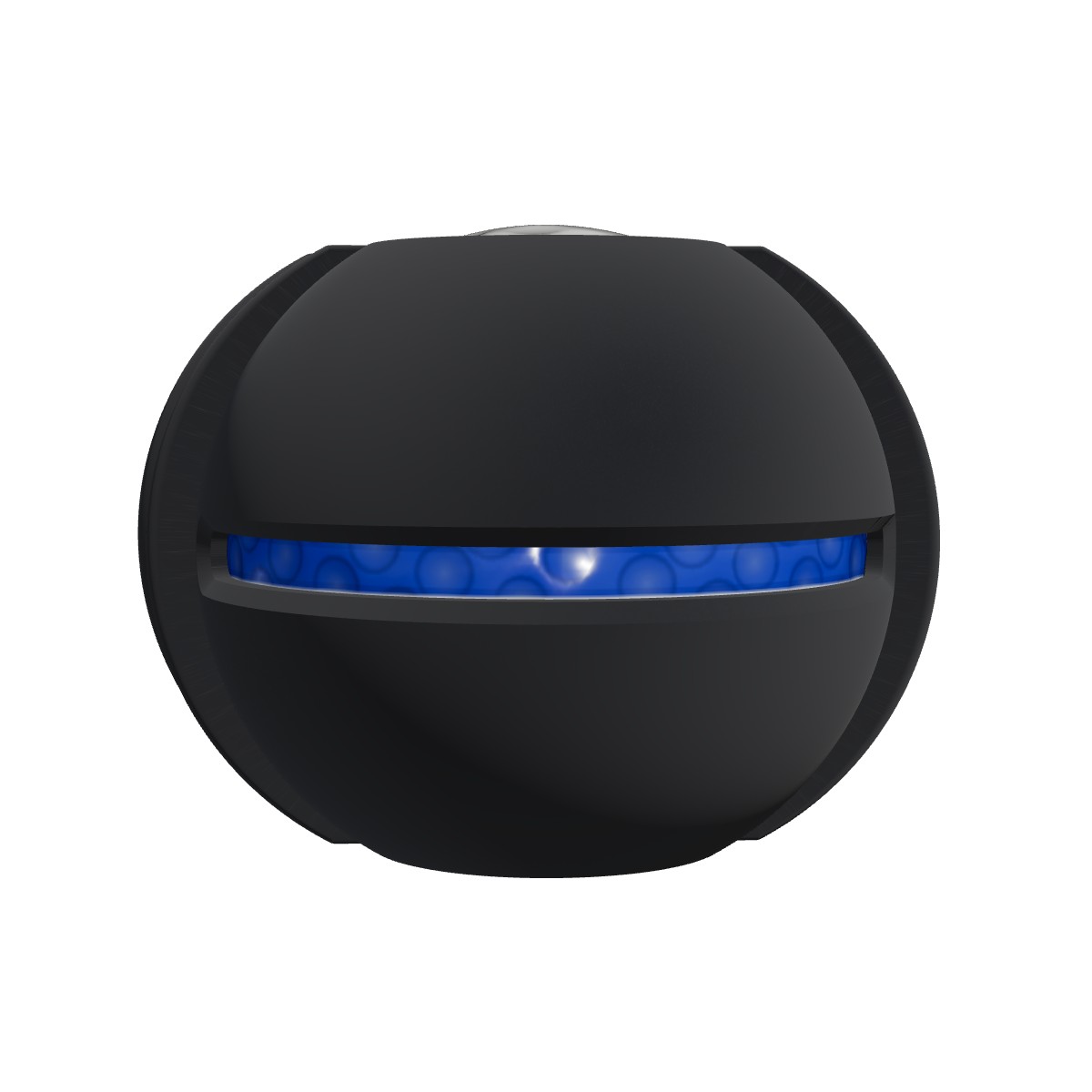
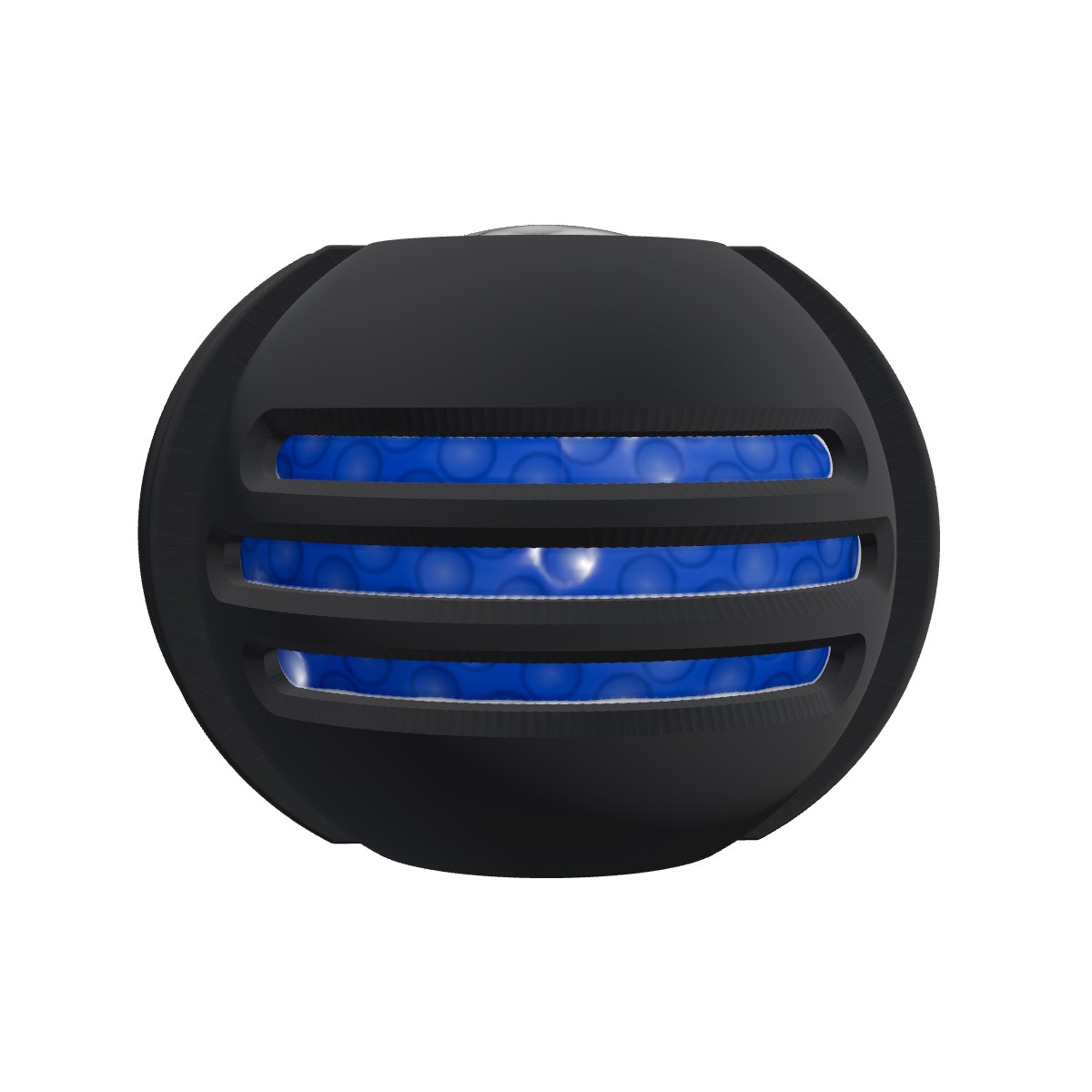
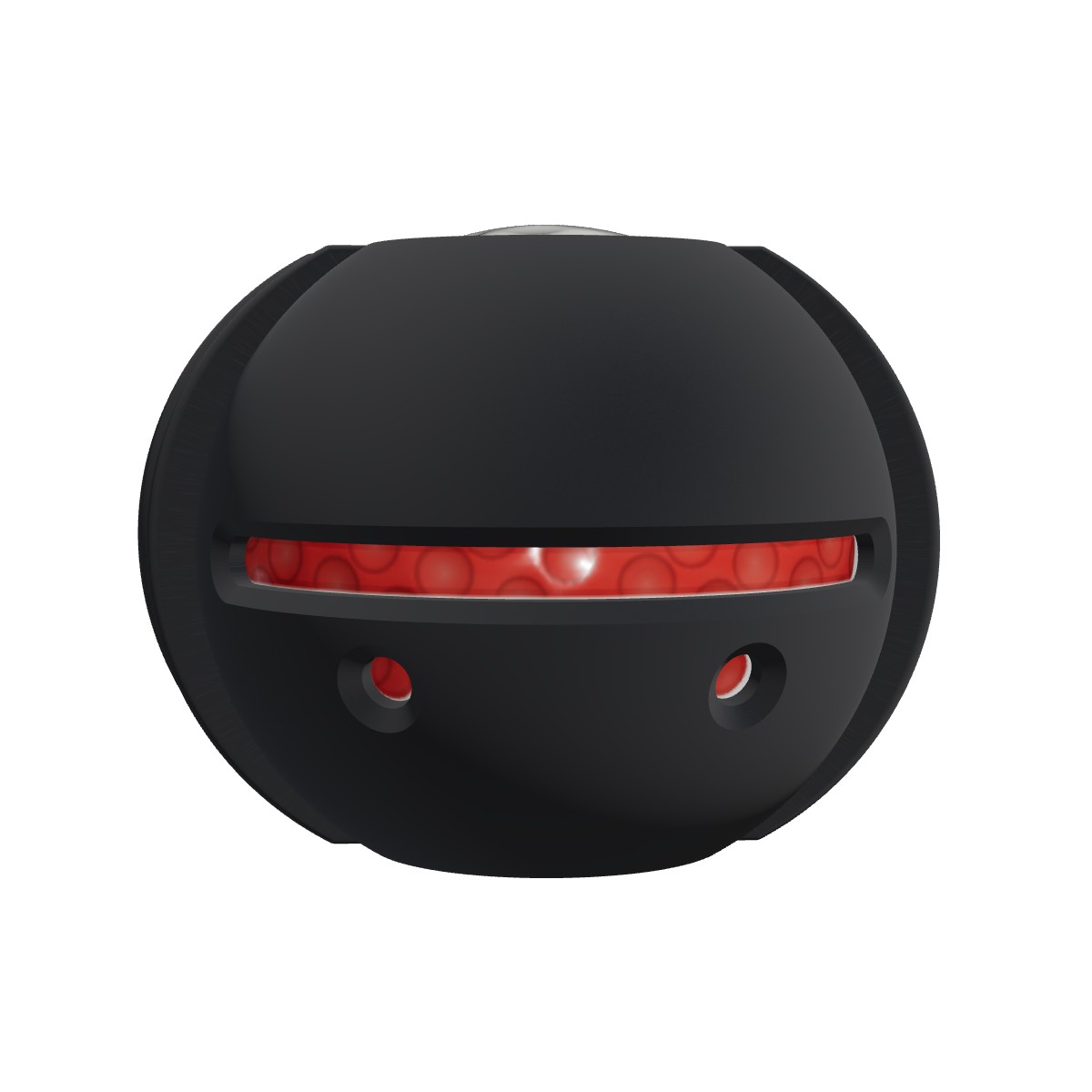
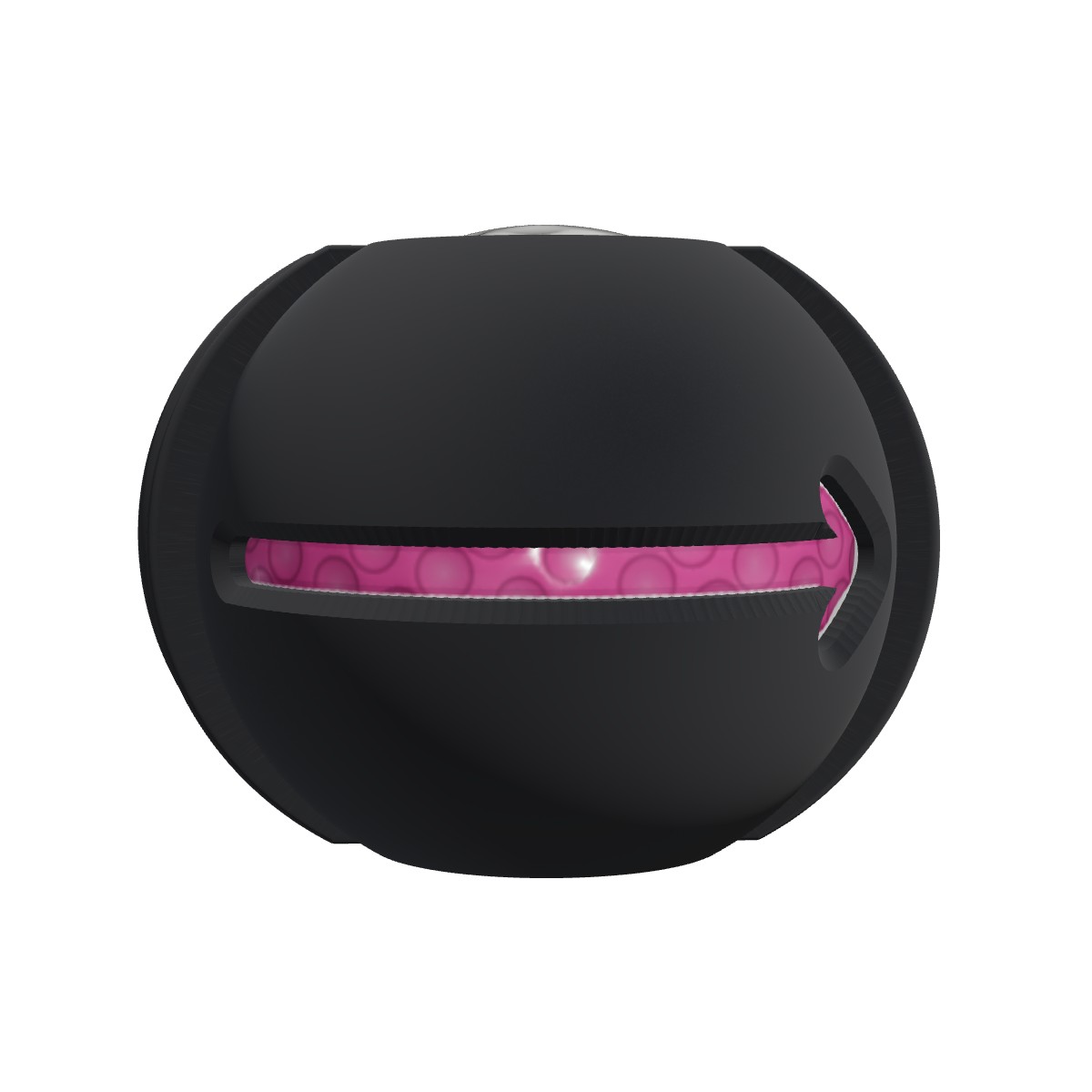
The stencil itself, with four of our own designs cut into it. Yours is cut to the design you make above — the part is the same.
Questions UK golfers ask about golf ball stencils
Does a line on a golf ball actually help you putt?
A line on a golf ball helps most golfers on short and middle-length putts, because aiming a line at the hole is easier than aiming a ball that looks the same from every side, and it shows you at address whether the putter face is square to it. It does not make you hole more forty-footers — at that range the read matters far more than the aim. The honest case for it is consistency: the same mark on every ball, set the same way each time.
Is a golf ball stencil legal in competition?
Marking your own ball with a line, dots or your initials is allowed under the Rules of Golf, and a stencil is simply a tidier way of drawing the mark. What you may not do is use an alignment aid to help you line up during the stroke itself, so the mark goes on the ball before you play, not as a device propped beside it. There is more on this in our guide to whether it is legal to draw a line on your golf ball.
How long does the line last on the ball?
A permanent-marker line drawn through a golf ball stencil lasts several rounds and usually outlives the ball itself, fading only where the club face strikes it. It sits in the cover rather than on top of it the way stamp ink does, so rain, a damp towel and a bunker will not lift it. When it does go faint, clip the stencil back on and run the pen through the same slots.
Which pen should I use with a golf ball stencil?
A fine permanent marker is what the slots are cut for — roughly a 1 mm nib, which is why a standard Sharpie Fine works well. A chisel or brush tip is too wide to reach the bottom of the slot and will smear along the top edge instead. Every Ball Buddy stencil comes with a pen in the colour you designed with.
Will a golf ball stencil fit my golf balls?
It fits any standard golf ball. Every ball made for play is within a fraction of 42.7 mm across, because the Rules set a minimum diameter and nobody makes them bigger, so a stencil cut for one make clips onto all of them. That includes Pro V1s, Chrome Softs, TP5s, lake balls and the range balls in your bag.
Should I get a golf ball stencil or a golf ball stamp?
Choose a golf ball stencil for an alignment line, and for a mark in permanent marker that outlasts stamp ink by several rounds. Choose a golf ball stamp for initials, a name or a logo pressed on in one second, with nothing to draw. A stamp cannot wrap the curve of the ball, so it cannot give you a putting line — which is why plenty of golfers carry both.
How to draw a straight line on a golf ball · The best pen for marking a ball · Is it legal? · Three alignment lines